عندما يرمش الاحتياطي الفيدرالي، يستمع الذهب: أسبوع من الإشارات المنقسمة، والتضخم اللاصق، والمرونة الهادئة للمعادن الثمينة
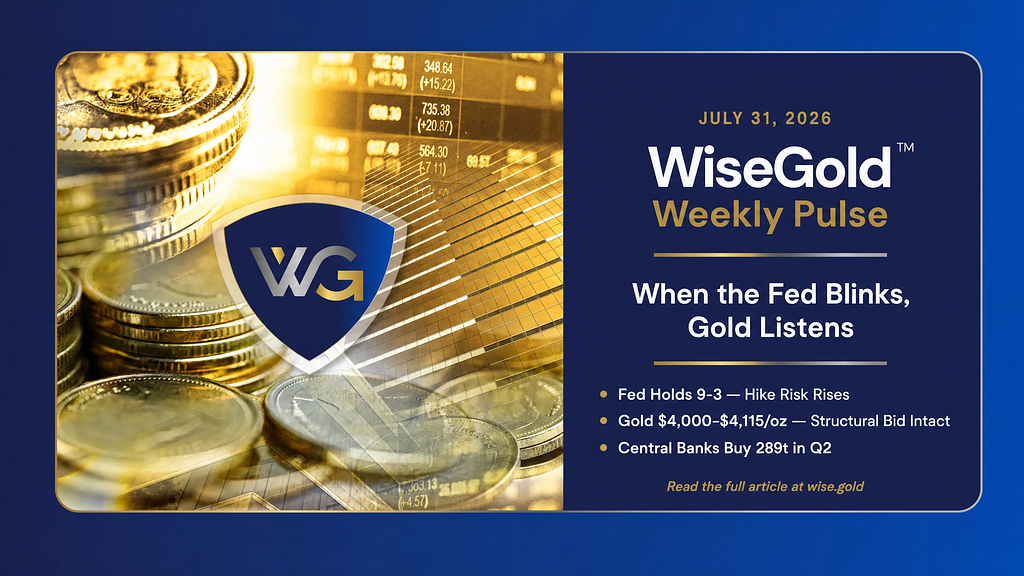
وايزغولد ويكلي بالس | 31 يوليو 2026
فترة التغطية: 25 يوليو 2026 (00:00:00 بتوقيت شرق الولايات المتحدة) إلى 31 يوليو 2026 (11:00:00 بتوقيت شرق الولايات المتحدة)
تتعاون WiseGold Capital مع المستشارين لمساعدتهم في إدارة الأصول لعملائهم. وايزغولد كابيتال ليست مديرة أصول أو مستشارة مالية؛ هي شركة استشارات ولوجستيات. لا يوجد ما في هذا المنشور يعتبر نصيحة استثمارية.
حول وايزغولد
تنشر مجلة وايزغولد الأسبوعية بالس من قبل شركة وايز غولد، وهي شركة استشارات وخدمات لوجستية تتعاون مع المستشارين الماليين والمكاتب العائلية ومديري الأموال لتسهيل الوصول إلى المعادن الثمينة المادية كجزء من إطار أوسع للحفاظ على الثروة وتنويع المحافظ الاستثمارية. تتوفر موارد إضافية، بما في ذلك تعليقات على السوق على مستوى مؤسساتي، ومحتوى تعليمي حول أساسيات المعادن الثمينة، ومعلومات حول خدمات الدعم الاستشاري من WiseGold، على موقع https://wise.gold.
الملخص التنفيذي
أبرز الأسبوع الماضي تداخل معقد بين التضخم المقاوم، وتغير توقعات السياسة النقدية، والاحتكاك الجيوسياسي المستمر، مما حافظ على ارتفاع تقلبات الأصول المختلفة. حافظت البنوك المركزية الكبرى على أسعار الفائدة مستقرة، حيث حافظ الاحتياطي الفيدرالي وبنك إنجلترا على مواقف مقيدة وسط ضغوط أسعار عنيدة، بينما حافظ بنك اليابان على 1٪ بنبرة متزايدة التصاعد. كشفت البيانات الاقتصادية الأمريكية عن تباطؤ في نمو الناتج المحلي الإجمالي للربع الثاني إلى 1.5٪، مصحوبا بتضخم مستمر في مؤشر PCE، مما عزز سردية "الأعلى لفترة أطول". وفي الوقت نفسه، أدت التوترات الجيوسياسية في الشرق الأوسط، خاصة الاضطرابات قرب مضيق هرمز، إلى زيادة في مخاطر العرض في أسواق الطاقة، رغم أن توقف الأعمال العدائية في أواخر الأسبوع خفف من ارتفاع أسعار النفط الخام.
في ظل هذا الظروف، أظهرت المعادن الثمينة مرونة قوية. تداول الذهب بالقرب من أعلى مستويات قياسية قبل أن يتراجع قليلا مع قوة الدولار وارتفاع عوائد سندات الخزانة، مما يبرز محاولته الهيكلية كوسيلة للتحوط ضد التضخم والمخاطر النظامية.
نقاط رئيسية:
- الاحتياطي الفيدرالي يحافظ على ثباته: حافظ مجلس السوق المفتوحة الفيدرالية على أسعار الفائدة عند 3.50٪–3.75٪ في تصويت منقسم 9–3.
- تباطأ النمو، والتضخم ثابت: نما الناتج المحلي الإجمالي الأمريكي في الربع الثاني بنسبة 1.5٪؛ ظل تضخم مؤشر الاستهلاك الشخصي في يونيو عند 3.7٪.
- تزداد حدة منحنى العائد: انحدار منحنى سندات الخزانة الأمريكية بشكل مكثف، حيث ارتفعت عوائد العشر سنوات نحو 4.66٪.
- تقلبات الطاقة: ظل خام برنت يقارب بين 88 و92 دولارا لكل برميل وسط مخاطر العرض في الشرق الأوسط.
- المعادن الثمينة المرنة: ظل الذهب فوق 4,000 دولار لكل أونصة، مدعوما بطلب البنك المركزي.
الجدول الزمني لأسبوع السوق والماكرو في المراجعة
- الجمعة 24 يوليو: ارتفعت طلبات البطالة الأولية في الولايات المتحدة قليلا إلى 197,000 للأسبوع المنتهي في 25 يوليو، منهية سلسلة ستة أسابيع من الانخفاضات وتشير إلى تليين طفيف في سوق العمل [10].
- الاثنين 27 يوليو: واجهت أسواق المعادن الثمينة والعملات الرقمية ضغوطا مع ارتفاع توقعات أسعار الفائدة الذي عزز عوائد الدولار الأمريكي وسندات الخزانة [5].
- الثلاثاء 28 يوليو: أشارت تقديرات يوروستات إلى أن التضخم السنوي في منطقة اليورو من المتوقع أن يرتفع إلى 2.9٪ في يوليو، ارتفاعا من 2.8٪ في يونيو [9].
- الأربعاء 29 يوليو: حافظ الاحتياطي الفيدرالي على سعر الفائدة الأساسي عند 3.50٪–3.75٪، مع معارضة ثلاثة من الأعضاء لرفع السعر بسبب استمرار التضخم [1].
- الخميس 30 يوليو: أظهر تقدير تقدم الناتج المحلي الإجمالي للربع الثاني من الولايات المتحدة تباطئا إلى نمو سنوي بنسبة 1.5٪، بينما سجل تضخم مؤشر الاستهلاك الشخصي في يونيو 3.7٪ [2] [8]. صوت بنك إنجلترا بنتيجة 6–3 للحفاظ على سعر الفائدة عند 3.75٪ [3].
- الجمعة 31 يوليو (10:00): تم تعديل مؤشر مشاعر المستهلك النهائي لجامعة ميشيغان لشهر يوليو إلى 55.2، مما يعكس تحسن الثقة رغم المخاوف المستمرة من التضخم [11]. حافظ بنك اليابان على سعر الفائدة عند 1.0٪، مما يشير إلى تحيز تصاعدي تجاه التضخم [4].
غوص عميق موضوعي
السياسة الكلية والنقدية
تظل السياسة النقدية العالمية متشددة بينما تتنقل البنوك المركزية في التوازن الدقيق بين تهدئة التضخم ودعم النمو. رافق قرار الاحتياطي الفيدرالي بالحفاظ على أسعار الفائدة عند 3.50٪–3.75٪ ثلاث أصوات معارضة لصالح الرفع، مما يشير إلى استمرار القلق بشأن ضغوط الأسعار الثابتة [1]. وبالمثل، حافظ بنك إنجلترا على سعر الفائدة عند 3.75٪، مشيرا إلى الحاجة لضمان عوائد التضخم بشكل مستدام لتحقيق الهدف في ظل تقلبات أسعار الطاقة [3]. وعلى النقيض من ذلك، حافظ بنك اليابان على سعر الفائدة عند 1.0٪ لكنه تبنى نبرة أكثر تشددا، مشيرا إلى أن التضخم من المرجح أن يتجاوز هدفه [4].
- صوت الاحتياطي الفيدرالي بنسبة 9-3 للحفاظ على أسعار الفائدة؛ أيدت الآراء المعارضة زيادة 25 نقطة أساس في الثانية.
- صوتت بنك الهندسة 6–3 لصالح الاحتفاظ بالأسعار؛ أيدت الآراء المعارضة زيادة 25 نقطة أساس في الثانية.
- حافظ بنك اليابان على أسعار الفائدة عند 1.0٪ وسط تدخلات مشتبه بها في العملات.
بيانات التضخم والنمو
تشير البيانات الاقتصادية إلى تباطؤ الاقتصاد الأمريكي الذي يواجه تضخما مستمرا. أظهر التقدير المسبق للناتج المحلي الإجمالي للربع الثاني الأمريكي نموا سنويا بنسبة 1.5٪، منخفضا من 2.1٪ في الربع الأول، مدفوعا بعجز تجاري متزايد وتضخم [2]. ارتفع مؤشر أسعار PCE، مؤشر التضخم المفضل لدى الاحتياطي الفيدرالي، بنسبة 3.7٪ على أساس سنوي في يونيو، متراجعا قليلا عن مايو لكنه ظل فوق الهدف بكثير [8]. في أوروبا، نما اقتصاد منطقة اليورو بنسبة 0.4٪ في الربع الثاني، بينما تشير التقديرات السريعة إلى أن التضخم في يوليو ارتفع إلى 2.9٪ [9].
- تباطأ نمو الناتج المحلي الإجمالي الأمريكي في الربع الثاني إلى 1.5٪ سنويا.
- ظل تضخم مؤشر المعادلة المقبلة في الولايات المتحدة في يونيو عند 3.7٪ على أساس سنوي.
- نما الناتج المحلي الإجمالي في الربع الثاني من منطقة اليورو بنسبة 0.4٪؛ تقدر التضخم في يوليو بنسبة 2.9٪.
ديناميكيات الأسعار ومنحنى العائد
شهد سوق الخزانة الأمريكي "تقلبة حادة" ملحوظة بعد قرار الاحتياطي الفيدرالي. انخفضت العوائد قصيرة الأجل مع فك المستثمرين رهاناتهم على رفع فوري لسعر الفائدة، بينما ارتفعت العوائد طويلة الأجل، مما يعكس مخاوف من التضخم المستمر والتزام الاحتياطي الفيدرالي بمواجهته [12]. ارتفع عائد سندات الخزانة لأجل 10 سنوات إلى حوالي 4.66٪، بينما وصل عائد الثلاثين عاما إلى أعلى مستوى له خلال 19 عاما، مما أضفى حالة من عدم اليقين في مشهد الدخل الثابت الأوسع.
- منحنى عائد سندات الخزانة "تدهور" بعد قرار الاحتياطي الفيدرالي.
- ارتفع عائد سندات الخزانة لأجل 10 سنوات إلى حوالي 4.66٪.
- وصل عائد سندات الخزانة لأجل 30 عاما إلى أعلى مستوى له خلال 19 عاما.
مشهد العملات الأجنبية والدولار
أظهر مؤشر الدولار الأمريكي (DXY) تقلبا، حيث تعزز في البداية بناء على توقعات الاحتياطي الفيدرالي المتشددة قبل أن يتراجع في أواخر الأسبوع. وبحلول يوم الجمعة، انخفض مؤشر DXY إلى ما دون 101، مما منح بعض الراحة لعملات الأسواق الناشئة [13]. ارتفع الين الياباني والفوز الكوري الجنوبي وسط تدخلات مشتبه بها من قبل سلطاتهما لدعم عملاتهم بعد سياسة بنك اليابان [4].
- انخفض مؤشر DXY إلى ما دون 101 في نهاية الأسبوع.
- ارتفعت ين وون بناء على تدخلات رسمية مشتبه بها.
- وفر الدولار اللين دعما مؤقتا للسلع المقومة بالدولار.
سياق الطاقة والسلع الأوسع
كانت أسواق الطاقة تهيمن عليها المخاطر الجيوسياسية، وخاصة الاضطرابات المستمرة في الشرق الأوسط ومضيق هرمز. تراوحت عقود برنت الآجلة للنفط الخام بين 88 و92 دولارا للبرميل خلال الأسبوع، مدعومة بالتهديد الذي يواجه إمدادات النفط العالمية [14]. ومع ذلك، فإن توقف الأعمال العدائية في أواخر الأسبوع خفف بعض من علاوة التعطل الحادة في العرض، مما تسبب في تراجع الأسعار قليلا. ظلت عقود الغاز الطبيعي الآجلة مستقرة نسبيا، حيث أغلقت عند 2.75 دولار لكل مليون وحدة سنكالية.
- تداول خام برنت تقريبا بين 88 و92 دولارا لكل برميل وسط التوترات في الشرق الأوسط.
- حافظت اضطرابات مضيق هرمز على علاوة مخاطر العرض.
- آمال وقف إطلاق النار في أواخر الأسبوع خففت من مخاوف التضخم في الطاقة على المدى القريب.
تركيز المعادن الثمينة
أظهرت المعادن الثمينة صمود، حيث عملت كوسيلة تحوط هيكلية ضد مخاطر الجيوسياسية والتضخم. تداول الذهب بحوالي 4000 دولار و4115 دولارا لكل أونصة خلال الفترة، مدعوما بالطلب المستقر من البنك المركزي، الذي بلغ 289 طنا في الربع الثاني [15]. تداولت الفضة بحوالي 55–60 دولارا لكل أونصة، متفوقة على الطلب الصناعي القوي. شهد البلاتين والبلاديوم تقلبات كبيرة، مدفوعة بمخاوف تركيز العرض في روسيا وجنوب أفريقيا. أظهرت بيانات الموقع من CFTC أن الاهتمام المفتوح بالذهب لا يزال قويا، رغم أن تدفقات صناديق المؤشرات المتداولة سجلت صافي خروج بلغ 45 طنا في الربع الثاني مع استجابة المستثمرين الغربيين للعوائد الأعلى [15].
- الذهب: 4,000 دولار – 4,115 دولار لكل أونصة. مدعوم بشراء البنك المركزي (289 طنينا في الربع الثاني).
- الفضة: 55–60 دولارا لكل أونصة. مدعومة بالطلب الصناعي وعروض الملاذ الآمن.
- البلاتين: 1,570 دولار – 1,672 دولار/أونصة. مدعومة بطلب المحفز على السيارات.
- بالاديوم: 1,250 دولار – 1,340 دولار لكل أونصة. متقلب بسبب مخاطر تركيز العرض.
الائتمان والسيولة
ظلت فروق الائتمان محصورة نسبيا رغم تقلبات أسعار الفائدة والأسهم. ظل فارق الائتمان في CCC قريبا من 9.78٪، مما يشير إلى أنه رغم ارتفاع تكاليف الاقتراض، لم يظهر بعد الضغوط الحادة في أسواق العائد المرتفع. ومع ذلك، فإن ارتفاع منحنى العائد و"السيطرة المتشددة" من قبل الاحتياطي الفيدرالي تشير إلى أن الظروف المالية تتشديد بشكل عضوي، مما قد يضغط على إعادة تمويل الشركات على المدى المتوسط.
- تظل فروق الائتمان مستقرة، متجنبة إشارات الضغوط الحادة.
- تشديد عضوي للظروف المالية من خلال عوائد أعلى على المدى الطويل.
مشاعر الأسهم والتقلبات
شهدت أسواق الأسهم الأمريكية أسبوعا متقلبا، حيث بدأت في البداية بدعم من السيطرة المشددة للاحتياطي الفيدرالي قبل أن ترتفع في نهاية الأسبوع، مدفوعة برأس المال الضخم المتعلق بالتقنية والذكاء الاصطناعي. أغلق مؤشر S&P 500 الفترة بارتفاع، بينما ارتفع مؤشر ناسداك. انهار التقلب، كما يقيس مؤشر VIX، بشكل كبير في أواخر الأسبوع إلى حوالي 17.09، مما يشير إلى عودة الشعور المخاطرة رغم عدم اليقين الاقتصادي الكلي الكامنة [13].
- ارتفعت مؤشرات S&P 500 وناسداك في أواخر الأسبوع بفضل قوة التقنية.
- انخفض مؤشر VIX بشكل حاد إلى ~17.09، مما يشير إلى تقليل الخوف على المدى القريب.
الجغرافيا السياسية والمخاطر الاستراتيجية
تظل المخاطر الجيوسياسية المحرك الرئيسي لديناميكيات السوق. الصراع في الشرق الأوسط، لا سيما تعطيل خطوط الشحن في مضيق هرمز والبحر الأحمر، لا يزال يهدد إمدادات الطاقة العالمية وسلاسل التوريد [14]. بينما وفر توقف مؤقت في الأعمال العدائية بعض التخفيف لأسعار النفط، لا يزال خطر التصعيد الهيكلي مرتفعا، مما يحافظ على حد أدنى تحت الأصول الآمنة مثل الذهب.
- تهدد اضطرابات مضيق هرمز تدفقات الطاقة العالمية.
- لا يزال الصراع في الشرق الأوسط محركا رئيسيا لمخاطر التضخم.
المواضيع الهيكلية وطويلة الأمد
يستمر الانتقال إلى الذكاء الاصطناعي وإعادة هيكلة سلاسل التوريد العالمية في الهيمنة على مواضيع الاستثمار طويلة الأمد. الزيادة في استثمارات مراكز البيانات تدفع الطلب على المعادن الصناعية، بما في ذلك الفضة، بينما تساهم في الوقت نفسه في الطلب على الطاقة وضغوط التضخم. بالإضافة إلى ذلك، يبرز الاتجاه المستمر نحو تنويع احتياطيات البنوك المركزية بعيدا عن الدولار الأمريكي على الطلب الهيكلي على الذهب [15].
- الاستثمار في البنية التحتية للذكاء الاصطناعي يدفع الطلب على المعادن الصناعية.
- تنويع الاحتياطي للبنك المركزي يدعم أسعار الذهب على المدى الطويل.
الروابط بين الأصول
- منحنى العائد والأسهم: "الانحدار المفاجئ" لمنحنى العائد أثار في البداية ضغطا على الأسهم من خلال الإشارة إلى تكاليف اقتراض أعلى لفترة أطول، قبل أن تتغلب أرباح التكنولوجيا على المخاوف الكلية.
- الدولار والسلع السعيدة: وفر التليين في نهاية الأسبوع لمؤشر DXY دفعة قوية للسلع المقومة بالدولار، وخاصة المعادن الثمينة.
- توقعات الطاقة والتضخم: أثرت تقلبات خام برنت بشكل مباشر على توقعات التضخم، مما عزز مواقف الاحتياطي الفيدرالي وبنك بريطانيا الحذرة في السياسة.
- الجغرافيا السياسية والملاذات الآمنة: حافظت التوترات في الشرق الأوسط على منافسة هيكلية للذهب، حتى مع ارتفاع العوائد الحقيقية الذي شكل رياحا معاكسة.
لمحة مصفوفة المخاطر
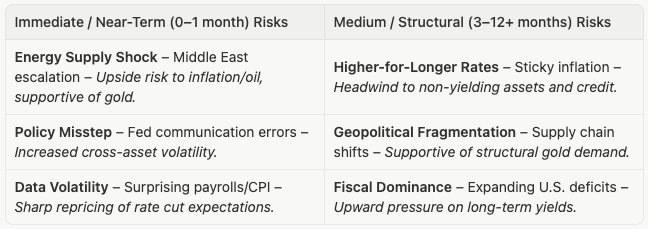
مراقبة السيناريو والمحفزات المستقبلية
- الرواتب غير الزراعية الأمريكية (أغسطس 2026): الاحتمال الأساسي. اختبار رئيسي لسوق العمل. قد يعزز تقرير قوي القبضة الصقرية، مما يشكل رياحا معاكسة للسبائك.
- انهيار وقف إطلاق النار في الشرق الأوسط: احتمال مرتفع. استئناف الأعمال العدائية سيرفع أسعار النفط ومخاوف التضخم، مما يدفع تدفقات ملاذ آمن إلى المعادن الثمينة.
- إصدار مؤشر أسعار المستهلك الأمريكي (منتصف أغسطس): الاحتمال الأساسي. وهذا أمر بالغ الأهمية لتحديد ما إذا كان اتجاه الانسحاب يتوقف. مؤشر أسعار المستهلك الأعلى = احتمال الرياح المعاكسة للسبائك.
سياق المحفظة والتداعيات
البيئة الحالية من تباطؤ النمو، والتضخم المستمر، وارتفاع المخاطر الجيوسياسية تسلط الضوء على تحديات بناء المحفظة التقليدية بنسبة 60/40. الارتباط الإيجابي بين الأسهم والسندات خلال صدمات التضخم يؤكد على الفائدة المحتملة للمنوعة البديلة. تشير مرونة المعادن الثمينة، رغم العوائد الحقيقية العالية، إلى أن دورها كأصل غير مرتبط وتحوط ضد عدم اليقين النظامي والجيوسياسي لا يزال ذا صلة لتخصيص الأصول الاستراتيجية.
أطروحة المعادن الثمينة الاستراتيجية
صفة التنويع
أداء الذهب خلال تقلبات الأسهم والسندات الأخيرة يؤكد ارتباطه المنخفض مع الأصول المالية التقليدية، حيث يعمل كعامل تنويع حاسم في المحفظة.
حماية الثروة والقوة الشرائية
مع استمرار التضخم بعناد فوق أهداف البنك المركزي، تستمر المعادن الثمينة في العمل كمخزن تاريخي للقيمة، تحمي القوة الشرائية من انخفاض قيمة العملة الورقية.
خيارات التخفيف من الانخفاضات والأزمات
يبرز السعي الهيكلي للذهب وسط التوترات في الشرق الأوسط دوره كوسيلة تحوط جيوسياسية، حيث يوفر خيارات للأزمات ويخفف من تخفيض المحافظ خلال الصدمات الخارجية.
محركات الطلب الهيكلي
توفر عمليات شراء البنوك المركزية القياسية والطلب الصناعي القوي على الفضة (المدفوعة بالذكاء الاصطناعي والطاقة الخضراء) أدنى أساسيا قويا لأسعار المعادن الثمينة، بغض النظر عن تدفقات الاستثمار الغربية.
تأطير التخصيص
تاريخيا، استخدمت المخصصات للمعادن الثمينة لتعزيز العوائد المعدلة حسب المخاطر وتقليل تقلبات المحفظة بشكل عام، خاصة في البيئات التي تتسم بالقمع المالي والتجزئة الجيوسياسية.
الملخص
- نبض الماكرو: النمو الأمريكي يتباطأ (الناتج المحلي الإجمالي 1.5٪) بينما لا يزال التضخم ثابتا (نسبة استهلاك نفس التكلفة 3.7٪).
- وضعية المعادن: صامدة؛ يحافظ الذهب على حوالي 4,100 دولار لكل أونصة مدعوما بشراء البنك المركزي.
- نغمة المخاطر: متقلب لكنه حاليا مليء بالمخاطر، مع انهيار مؤشر VIX في أواخر الأسبوع.
- تفاصيل الموقع: تدفقات صناديق المؤشرات المتداولة الخارجة تتناقض مع الطلب القوي على القطاع الرسمي وOTC.
- المراقبة المستقبلية: بيانات الرواتب وأسعار المستهلك لشهر أغسطس ضرورية لخطوة الاحتياطي الفيدرالي القادمة.
- الموضوع البنيوي: التجزئة الجيوسياسية وتنويع الاحتياطيات يفضلان الذهب.
قائمة المصادر
[1] الاحتياطي الفيدرالي / NBC واشنطن — يصدر الاحتياطي الفيدرالي بيان لجنة السوق المفتوحة الفيدرالية؛ الاحتياطي الفيدرالي يحافظ على أسعار الفائدة دون تغيير، لكن ثلاثة أعضاء صوتوا على رفع الأسعار وسط ارتفاع الأسعار — 29 يوليو 2026 — https://www.federalreserve.gov/newsevents/pressreleases/monetary20260729a.htm | https://www.nbcwashington.com/news/national-international/federal-reserve-interest-rate-decision-july/4135864/ [2] مكتب التحليل الاقتصادي — الناتج المحلي الإجمالي، الربع الثاني 2026 (التقدير المسبق) — 30 يوليو 2026 — https://www.bea.gov/data/gdp/gross-domestic-product [3] بنك إنجلترا — تقرير السياسة النقدية — يوليو 2026 — 30 يوليو 2026 — https://www.bankofengland.co.uk/monetary-policy-report/2026/july-2026 [4] البنوك المركزية — بنك اليابان يحافظ على الين وفاز بارتفاع كلاهما بسبب تدخلات مشتبه بها — 31 يوليو 2026 — https://www.centralbanking.com/central-banks/monetary-policy/monetary-policy-decisions/7976530/boj-holds-as-yen-and-won-both-rise-on-suspected-interventions [5] بورصات السبائك — تقرير السوق الأسبوعي: اتجاهات المعادن الثمينة والعملات الرقمية — 31 يوليو 2026 — 31 يوليو 2026 — https://bullionexchanges.com/blog/weekly-market-report-precious-metals-crypto-trends-july-31-2026 [6] تحديث سوق المعادن الثمينة في تكساس — 30/7/2026 — 30 يوليو 2026 — https://texmetals.com/all-news/precious-metals-market-update-7-30-2026 [7] الجزيرة — تراجع نمو الناتج المحلي الإجمالي الأمريكي مع ضغط التضخم والعجز التجاري على الاقتصاد — 30 يوليو 2026 — https://www.aljazeera.com/economy/2026/7/30/us-gdp-growth-dips-as-inflation-and-trade-deficits-pressure-economy [8] مكتب التحليل الاقتصادي — مؤشر أسعار نفقات الاستهلاك الشخصي — 31 يوليو 2026 — https://www.bea.gov/data/personal-consumption-expenditures-price-index [9] يوروستات — التضخم السنوي في منطقة اليورو يصل إلى 2.9٪ — 31 يوليو 2026 — https://ec.europa.eu/eurostat/web/products-euro-indicators/w/2-31072026-ap [10] رويترز — زيادة طلبات البطالة الأسبوعية في الولايات المتحدة أقل من المتوقع — 30 يوليو 2026 — https://www.reuters.com/business/us-weekly-jobless-claims-increase-less-than-expected-2026-07-30/ [11] Trading Economics — معدل معنويات المستهلكين في الولايات المتحدة للأعلى إلى أعلى مستوى له خلال خمسة أشهر — 31 يوليو 2026 — https://tradingeconomics.com/united-states/consumer-confidence/news/571798 [12] رويترز — منحنى عائد سندات الخزانة الأمريكية 'تطور' يعكس الرأي بأن الاحتياطي الفيدرالي قد لا يعيد رفع السعر — 31 يوليو 2026 — https://www.reuters.com/business/us-treasury-yield-curve-twist-reflects-view-fed-may-not-hike-again-2026-07-31/ [13] Rio Times — تقرير الاقتصاد العالمي — 31 يوليو 2026 — 31 يوليو 2026 — https://www.riotimesonline.com/global-economy-briefing-july-31-2026/ [14] الجزيرة — هل العالم معرض لخطر حدوث صدمة طاقة أخرى؟ — 29 يوليو 2026 — https://www.aljazeera.com/video/counting-the-cost/2026/7/29/is-the-world-at-risk-of-another-energy-shock [15] مجلس الذهب العالمي — سوق الذهب يظهر صمودا مع تراجع زخم الأسعار في الربع الثاني — 30 يوليو 2026 — https://www.gold.org/news-and-events/press-releases/gold-market-shows-resilience-price-momentum-cools-q2
المنهجية والملاحظات
يجمع هذا التقرير بيانات الاقتصاد الكلي، والسياسة النقدية، وبيانات السوق من مصادر موثوقة متاحة للجمهور لفترة التغطية. يتم تقريب نطاقات أسعار السلع والمعادن الثمينة بناء على تداول العقود الآجلة الفورية والعقود الآجلة للأشهر الأولى خلال الأسبوع. تلتزم قواعد الطوابع الزمنية بمعايير EST. يتضمن التقرير إصدارات بيانات مقررة يوم الجمعة الساعة 10:00 صباحا بتوقيت شرق الولايات المتحدة، مثل مؤشر مشاعر المستهلك بجامعة ميشيغان، لضمان تغطية شاملة.
الإفصاح
هذا التقرير لأغراض إعلامية فقط ولا يشكل نصيحة استثمارية، أو توصية، أو عرضا، أو دعوة لشراء أو بيع أي أداة مالية. تستند الآراء المعبر عنها إلى معلومات متاحة للجمهور يعتقد أنها موثوقة، لكن لا يمكن ضمان الدقة أو الاكتمال. الأداء السابق لا يدل على النتائج المستقبلية. يجب على القراء إجراء تحليلاتهم الخاصة واستشارة محترفين مؤهلين قبل اتخاذ أي قرارات مالية.
#WiseGold #PreciousMetals #Gold #MacroEconomics #MonetaryPolicy #FederalReserve #InflationHedge #YieldCurve #Geopolitics #CentralBanks #WealthProtection #FinancialAdvisors #FamilyOffice #AlternativeInvestments #PortfolioDiversification #GlobalMarkets #GoldMarket #SilverMarket #MarketUpdate #WeekInReview #WeeklyPulse #FixedIncome #WiseGoldCapital