Pulso Semanal WiseGold | 17 de julho de 2026
Período de Cobertura: 11 de julho de 2026 (00:00:00 EST) a 17 de julho de 2026 (11:00:00 EST)
A WiseGold Capital faz parceria com consultores para ajudá-los a gerenciar ativos para seus clientes. A WiseGold Capital não é gestora de ativos nem consultora financeira; É uma empresa de consultoria e logística. Nada nesta publicação constitui aconselhamento de investimento.
Sobre a WiseGold
O WiseGold Weekly Pulse é publicado pela WiseGold, uma empresa de consultoria e logística que faz parcerias com consultores financeiros, family offices e gestores de fundos para facilitar o acesso a metais preciosos físicos como parte de um quadro mais amplo de preservação de patrimônio e diversificação de portfólio. Recursos adicionais, incluindo comentários de mercado de nível institucional, conteúdo educacional sobre fundamentos de metais preciosos e informações sobre os serviços de apoio de consultoria da WiseGold, estão disponíveis no https://wise.gold.
Resumo Executivo
O cenário financeiro desta semana foi dominado por uma divergência acentuada entre o esfriamento dos dados de inflação doméstica e um aumento do choque geopolítico do petróleo. O Índice de Preços ao Consumidor (IPC) dos EUA de junho foi mais fraco do que o esperado, 3,5% ano a ano, inicialmente impulsionando as expectativas de cortes nas taxas do Federal Reserve [1]. No entanto, uma intensificação repentina do conflito EUA-Irã, marcada por ataques militares e um novo bloqueio naval do Estreito de Ormuz, fez com que os preços do petróleo bruto subissem mais de 9%, atingindo um recorde de várias semanas [2]. Esse choque do lado da oferta complicou imediatamente a perspectiva da política monetária, já que o presidente do Fed, Kevin Warsh, reiterou uma postura de "tolerância zero" para a inflação persistentemente elevada durante seu depoimento semestral no Congresso [3]. Consequentemente, os mercados rapidamente revalorizaram a probabilidade de um aumento das taxas em julho, elevanto os rendimentos dos títulos do Tesouro e o dólar americano, o que por sua vez pressionou o complexo dos metais preciosos [4]. Apesar dos ventos contrários de curto prazo causados pelo aumento dos custos de oportunidade, as correntes estagflacionárias, o resfriamento das métricas de crescimento aliadas ao aumento dos custos de energia, reforçam a tese estratégica do ouro como um ativo crítico para diversificação de portfólio e preservação de patrimônio.
Principais Pontos
- A inflação esfria, mas riscos energéticos se aproximam: o IPC de junho caiu para 3,5% em relação ao ano, mas o aumento do petróleo ameaça reverter o progresso [1] [2].
- Fed muda de posição agressiva devido ao choque do petróleo: Esperanças de corte de juros foram frustradas enquanto os mercados valorizam as probabilidades maiores de um aumento em julho [3] [4].
- Geopolítica impulsiona a volatilidade do mercado: Ataques EUA-Irã interrompem o Estreito de Ormuz, aumentando a demanda por energia e porto seguro [2].
- Metais pressionados por rendimentos e dólar: Ouro e prata recuam em meio ao aumento dos custos de oportunidade, embora a demanda física persista [4].
Linha do tempo da Semana de Revisão do Mercado & Macro
- Sex, 10 de julho: Os pedidos semanais de seguro-desemprego dos EUA (semana encerrada em 11 de julho) caem para 208.000, contrariando as expectativas e sinalizando estabilidade contínua no mercado de trabalho [22]. Os ganhos do mercado de ações da semana anterior se mantêm para a sessão.
- Seg, 13 de julho: EUA e Irã trocam ataques militares durante o fim de semana; O Irã mira embarcações no Estreito de Ormuz, enviando o petróleo WTI acima de 9% [2]. Metais preciosos caem fortemente devido a comentários agressivos do Fed sobre riscos de inflação [4].
- Ter-feira, 14 de julho: Relatório do IPC de junho dos EUA mostra que a inflação geral esfriou para 3,5% ano a ano, impulsionada por uma queda temporária nos preços da energia que desde então reverteu [1]. O presidente do Fed, Kevin Warsh, testemunha perante o Senado, enfatizando o compromisso do banco central com a meta de 2% [3].
- Qua 15 Jul: O Banco do Canadá mantém sua taxa de política em 2,25%, citando crescimento econômico mais fraco do que o esperado [6]. O Índice de Preços ao Produtor (PPI) dos EUA cai inesperadamente 0,3% em junho, embora os dados antecedam o recente pico de petróleo [7].
- Quinta-feira, 16 de julho: As vendas no varejo dos EUA aumentam marginalmente 0,2% em junho, refletindo gastos cautelosos do consumidor [8]. O Banco Central Europeu (BCE) sinaliza que manterá as taxas estáveis na próxima semana, mas aponta para um possível aumento em setembro devido à recuperação dos preços da energia [9].
- Sex, 17 de julho (10h00): Índice preliminar de Sentimento do Consumidor da Universidade de Michigan para julho sobe para 54,4, superando as expectativas, embora persistam preocupações com o novo conflito no Oriente Médio [10]. Os incançamentos imobiliários nos EUA se recuperaram 19% em junho, impulsionados pela construção multifamiliar, enquanto os incançamentos de casas unifamiliares caíram [11].
Mergulhos Temáticos Profundos
Política Macro e Monetária
Os bancos centrais globais enfrentam um novo dilema à medida que choques do lado da oferta ameaçam descarrilar o progresso da desinflação. Nos EUA, o depoimento do presidente do Fed, Kevin Warsh, no Congresso, ressaltou um compromisso firme com a estabilidade dos preços, observando que dados recentes de inflação fraca não significam "missão cumprida" [3]. O Banco do Canadá manteve sua taxa de política em 2,25%, equilibrando o crescimento lento com pressões persistentes de preços [6]. Enquanto isso, espera-se que o BCE mantenha sua taxa de depósito em 2,25% na próxima semana, embora o recente aumento dos preços da energia tenha aumentado a probabilidade de um aumento em setembro [9]. O Banco da Coreia também sinalizou um aumento iminente das taxas para combater a inflação, agravado pelo aumento dos custos do petróleo e por um won mais fraco [12].
Dados de Inflação e Crescimento
Os dados de junho apresentaram um quadro enganosamente benigno da inflação, em grande parte devido a uma pausa temporária nos preços da energia. O IPC principal dos EUA subiu 3,5% ano a ano, abaixo das expectativas, enquanto o IPC núcleo permaneceu em 2,6% [1]. O IPP também registrou uma surpreendente queda mensal de 0,3% [7]. No entanto, esses números antecedem o recente aumento no petróleo bruto. No campo do crescimento, as vendas no varejo nos EUA cresceram um modesto 0,2% em junho, sugerindo cautela do consumidor [8], enquanto os inchoamentos apresentaram um cenário misto, com uma recuperação nas unidades multifamiliares mascarando uma leve queda na construção de casas unifamiliares [11].
Taxas e Dinâmica da Curva de Juros
A curva de juros sofreu um "acentuamento urso" à medida que o choque geopolítico do petróleo e a retórica agressiva do Fed motivaram uma reprecificação das expectativas de taxa de juros. O rendimento do Tesouro dos EUA a 10 anos subiu para aproximadamente 4,57%, enquanto o rendimento de 2 anos ficou em torno de 4,15%, mantendo um spread positivo de cerca de 42 pontos-base [13]. A rápida mudança do mercado de precificar cortes de juros para antecipar possíveis aumentos reflete a sensibilidade aumentada aos riscos inflacionários e a percepção de que o Fed pode ser forçado a manter as taxas "mais altas por mais tempo."
Panorama de FX & Dólar
O dólar americano demonstrou resiliência, apoiada por fluxos de refúgio seguro e pela perspectiva de uma política monetária mais restritiva. O índice DXY negociou próximo ao nível de 100,70, recuperando-se da fraqueza anterior à medida que a escalada no Oriente Médio provocou uma mudança de qualidade [14]. O dólar mais forte atuou como um obstáculo para commodities e moedas de mercados emergentes, complicando as perspectivas de inflação para nações dependentes de energia importada.
Contexto de Energia e Commodities Gerais
Os mercados de energia foram o epicentro da volatilidade esta semana. O colapso de um acordo provisório EUA-Irã e os subsequentes ataques militares interromperam o transporte marítimo no crítico Estreito de Ormuz [2]. Os futuros do Brent ultrapassaram US$ 84 por barril, enquanto o WTI ultrapassou US$ 80, refletindo um significativo prêmio de risco geopolítico [15]. Esse choque de oferta ameaça se estender para os preços mais amplos das commodities e a inflação do consumidor, apresentando um grande desafio para os formuladores de políticas globalmente.
Foco em Metais Preciosos
Metais preciosos enfrentaram ventos contrários significativos devido à alta do dólar americano e aos rendimentos mais altos dos títulos do Tesouro durante o período de cobertura. O ouro foi negociado em uma faixa de aproximadamente $4.012–$4.074/oz (spot), recuando em relação aos picos recentes à medida que o mercado de papel descontou o custo de oportunidade de manter ativos sem rendimento [4] [16]. A prata apresentou volatilidade semelhante, negociando entre aproximadamente $56,70–$58,55/oz [4] [17]. A platina foi negociada entre $1.593–$1.616/onça e o paládio na faixa de aproximadamente $1.241–$1.277/oz [4] [17]. Apesar da fraqueza do preço, a demanda física permanece robusta, já que os investidores reconhecem o potencial estagflacionário do atual ambiente macro. Os dados de posicionamento indicam algum desmantelamento de posições longas em ETFs de ouro, com as posições caindo para o menor nível de nove meses e meio, refletindo a mudança nas expectativas de juros [4]. Os dados do COT da semana encerrada em 10 de julho mostraram posições líquidas líquidas de ouro geridas em aproximadamente +116.161 contratos, sugerindo que o posicionamento permanece construtivo, mas vulnerável a nova liquidação caso o reprecificação agressiva acelere [23]. Demanda do banco central: Nenhum novo dado verificável de compras do banco central foi publicado dentro da janela de cobertura.
Crédito e Liquidez
As condições de crédito permanecem relativamente estáveis, embora a rápida reprecificação das taxas de juros represente riscos para setores altamente alavancados. Os rendimentos dos títulos corporativos continuam atraentes, mas o potencial para um aperto adicional do Fed pode levar a spreads maiores e liquidez mais apertada nos próximos meses [18]. O setor bancário registrou lucros fortes no segundo trimestre, impulsionados pelas receitas de negociação e bancos de investimento, sugerindo resiliência no sistema financeiro apesar do cenário macroeconômico incerto [19].
Sentimento de Ações e Volatilidade
Os mercados acionistas apresentaram desempenho misto, divididos entre lucros corporativos sólidos e ansiedades crescentes sobre as taxas de juros. O S&P 500 sofreu quedas marginais, já que os investidores saíram das ações de tecnologia, enquanto o índice de volatilidade VIX permaneceu moderado, mas propenso a picos repentinos nas manchetes geopolíticas [20]. O tema principal do investimento em IA continua a apoiar as avaliações de mega-caps em tecnologia, embora as preocupações sobre a sustentabilidade dessa tendência estejam crescendo [21].
Geopolítica & Risco Estratégico
O conflito no Oriente Médio ressurgiu como o principal motor do risco global. A troca de ataques militares entre os EUA e o Irã, juntamente com as interrupções no Estreito de Ormuz, aumentou a ameaça de uma guerra regional mais ampla [2]. Essa escalada impacta não apenas os mercados de energia, mas também introduz uma incerteza significativa nas cadeias de suprimentos globais e rotas comerciais, reforçando a necessidade de ativos de refúgio seguro.
Temas Estruturais e de Longo Prazo
O enorme ciclo de investimentos de capital impulsionado pela inteligência artificial permanece um tema estrutural dominante. As empresas estão investindo pesadamente em infraestrutura de IA, data centers e tecnologias relacionadas, o que deve aumentar a produtividade a longo prazo [21]. No entanto, essa expansão também contribui para desequilíbrios entre oferta e demanda em certos setores, como semicondutores e geração de energia, adicionando uma camada única de pressão inflacionária à economia [5].
Interconexões entre Ativos
- Geopolítica & Energia: O conflito EUA-Irã causou diretamente um aumento nos preços do petróleo bruto, reintroduzindo um prêmio de risco significativo no mercado de energia.
- Energia e Taxas: A alta nos preços do petróleo rapidamente se traduziu em expectativas de inflação mais altas, levando os mercados a reprecificar a probabilidade de aumentos das taxas do Fed e impulsionando os rendimentos do Tesouro para alta.
- Taxas e Metais Preciosos: Rendimentos mais altos dos títulos do Tesouro e um dólar americano mais forte aumentaram o custo de oportunidade de manter ouro e prata, levando a uma queda nos preços dos metais preciosos apesar dos riscos estagflacionários subjacentes.
- Ações e Tecnologia: O tema estrutural do investimento em IA continua a apoiar os mercados de ações, especialmente o setor de tecnologia, oferecendo um contrapeso aos ventos contrários do aumento das taxas de juros e da incerteza geopolítica.
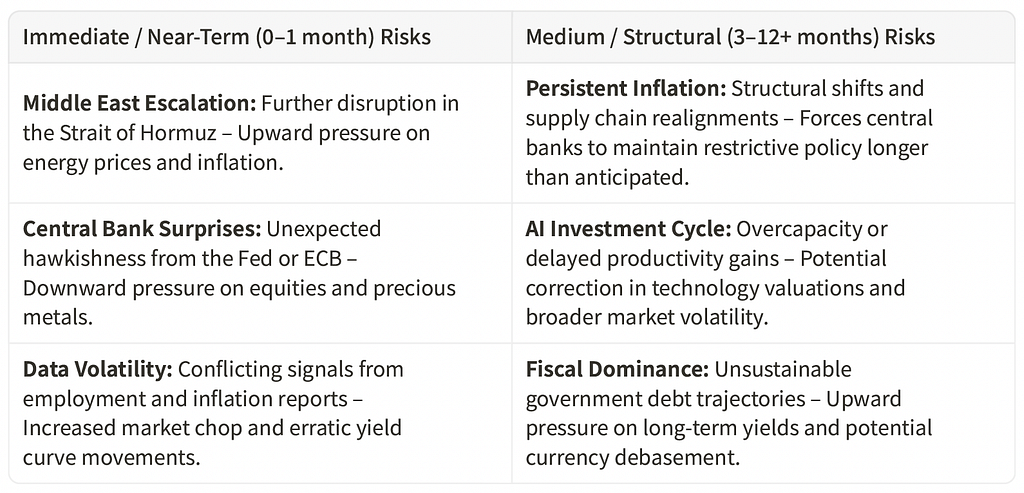
Snapshot da Matriz de Risco
Observação de Cenários & Catalisadores Avançados
- Reunião de Política do BCE (23 de julho): Probabilidade Base. Espera-se que o BCE mantenha as taxas estáveis, mas qualquer orientação agressiva sobre um aumento em setembro pode impulsionar o euro e pesar sobre o dólar.
- Reunião de Política do FOMC (28–29 de julho): Probabilidade Elevada. Os mercados vão analisar de perto a declaração do Fed e a coletiva de imprensa do presidente Warsh em busca de pistas sobre o caminho das taxas. Uma surpresa belicista = vento contrário potencial para o ouro de barra.
- Desenvolvimentos no Oriente Médio: Probabilidade Elevada. Novos ataques militares ou perturbações prolongadas no Estreito de Ormuz podem desencadear outro aumento nos preços do petróleo, reforçando os temores estagflacionários e apoiando a demanda física por metais preciosos.
Contexto e Implicações do Portfólio
O atual ambiente macroeconômico, caracterizado por uma colisão entre dados domésticos em esfriamento e choques geopolíticos crescentes, destaca a importância de uma construção robusta de portfólios. A rápida reprecificação das expectativas de taxa de juros e o ressurgimento da inflação impulsionada pela energia ressaltam as limitações das alocações tradicionais 60/40. Nesse contexto, a justificativa estratégica para manter uma alocação diversificada em ativos sólidos continua sendo convincente. Embora a volatilidade do mercado em papel possa criar flutuações de preço de curto prazo, os fundamentos subjacentes sugerem que ativos não correlacionados com política monetária e risco geopolítico desempenharão um papel crucial na preservação do poder de compra e na mitigação do risco de queda.
Tese Estratégica sobre Metais Preciosos
Atributo de Diversificação
Metais preciosos continuam a demonstrar seu valor como ativos não correlacionados. Durante períodos de agudo estresse geopolítico e mudanças nas expectativas de política monetária, o ouro e a prata oferecem um contrapeso à volatilidade inerente às ações e à renda fixa.
Proteção de Patrimônio e Poder de Compra
A ressurreição dos preços da energia evidencia a ameaça persistente da inflação. O papel histórico do ouro como reserva de valor o torna uma ferramenta vital para proteger o poder de compra contra os efeitos erosivos da desvalorização da moeda fiduciária e dos choques de preços do lado da oferta.
Mitigação de Redução de Impacto e Opcionalidade de Crise
A escalada repentina no Oriente Médio serve como um lembrete contundente da natureza imprevisível dos riscos globais. Os metais preciosos fornecem opcionalidade essencial em crises, atuando como âncora financeira durante períodos de forte deslocamento do mercado ou instabilidade geopolítica.
Fatores de Demanda Estrutural
Além do apelo de refúgio, os metais preciosos se beneficiam de fatores de demanda estrutural. Prata, platina e paládio são componentes críticos na transição para energia verde e na manufatura avançada, fornecendo um piso fundamental para os preços mesmo em meio a ventos macroeconômicos.
Estrutura de Alocação
De uma perspectiva histórica e acadêmica, uma alocação estratégica em metais preciosos não é vista como uma negociação especulativa, mas como um elemento fundamental de uma carteira resiliente. Essa alocação foi projetada para aumentar os retornos ajustados ao risco e proporcionar estabilidade de longo prazo ao longo de vários ciclos econômicos.
Cápsula Resumo
- Pulso Macro: O resfriamento dos dados de inflação doméstica colide com um forte choque geopolítico do petróleo, complicando a perspectiva de política do banco central.
- Posição dos Metais: Metais preciosos enfrentam pressão de curto prazo devido a um dólar mais forte e rendimentos mais altos, mas o mercado físico continua sustentado por riscos estagflacionários.
- Tom de Risco: A elevada incerteza geopolítica e a possibilidade de taxas de juros "mais altas por mais tempo" estão impulsionando a volatilidade do mercado.
- Nuance de Posicionamento: A venda no mercado de papel em ETFs contrasta com a forte demanda física, já que investidores buscam proteção de riqueza tangível.
- Forward Watch: Todos os olhos estão voltados para as próximas reuniões do BCE e do FOMC, assim como para os desenvolvimentos no Estreito de Ormuz, em busca de pistas direcionais.
- Tema Estrutural: O ciclo de investimento em IA continua impulsionando os gastos de capital, enquanto a transição energética sustenta a demanda industrial de longo prazo por prata e PGMs.
Lista de Fontes
[1] Reuters — Inflação ao consumidor dos EUA modera; Riscos de alta permanecem em meio a um novo conflito no Oriente Médio — 14 de julho de 2026 — https://www.reuters.com/business/us-consumer-inflation-slows-more-than-expected-june-2026-07-14/ [2] Reuters — EUA e Irã atacam infraestrutura em escalada arriscada — 17 de julho de 2026 — https://www.reuters.com/world/middle-east/iran-launches-fresh-attacks-after-sixth-day-us-strikes-2026-07-17/ [3] Wall Street Journal — Warsh diz ao Congresso que o Fed não tem 'tolerância' para alta inflação — 14 de julho de 2026 — https://www.wsj.com/economy/central-banking/warsh-tells-congress-the-fed-has-no-tolerance-for-high-inflation-50c5dfa8 [4] Atualização do Mercado de Metais Preciosos do Texas sobre Metais Preciosos: 13/07/2026 — 13 de julho de 2026 — https://texmetals.com/all-news/precious-metals-market-update-7-13-2026 [5] Federal Reserve — Discurso do governador Cook sobre a perspectiva econômica — 15 de julho de 2026 — https://www.federalreserve.gov/newsevents/speech/cook20260715a.htm [6] Banco do Canadá — O Bank of Canada mantém a taxa de política monetária em 21/4% — 15 de julho de 2026 — https://www.bankofcanada.ca/2026/07/fad-press-release-2026-07-15/ [7] Reuters — Preços ao produtor nos EUA registram maior queda em 14 meses; Riscos inflacionários ainda tendem para cima — 15 de julho de 2026 — https://www.reuters.com/business/us-producer-prices-unexpectedly-fall-june-2026-07-15/ [8] Reuters — Preços mais baixos da gasolina restringem as vendas no varejo nos EUA, tendência subjacente sólida — 16 de julho de 2026 — https://www.reuters.com/business/us-retail-sales-rise-marginally-june-2026-07-16/ [9] Reuters — O BCE manterá as taxas agora, mas a ressurgimento dos preços da energia aponta para aumento em setembro: pesquisa Reuters — 16 de julho de 2026 — https://www.reuters.com/business/ecb-hold-rates-now-energy-price-resurgence-points-september-hike-2026-07-16/ [10] Reuters — O sentimento do consumidor nos EUA melhora em julho; Conflito renovado no Oriente Médio representa risco de queda — 17 de julho de 2026 — https://www.reuters.com/markets/europe/us-consumer-sentiment-improves-july-renewed-middle-east-conflict-poses-downside-2026-07-17/ [11] Reuters — Início de moradias unifamiliares nos EUA e permissões de construção caem de junho a 17 de julho de 2026 — https://www.reuters.com/world/us-single-family-housing-starts-building-permits-fall-june-2026-07-17/ [12] Reuters — Banco central da Coreia do Sul vai aumentar as taxas pela primeira vez em mais de três anos em 16 de julho — 14 de julho de 2026 — https://www.reuters.com/world/asia-pacific/south-korea-central-bank-raise-rates-first-time-over-three-years-july-16-2026-07-14/ [13] StreetStats — Curva de Rendimento do Tesouro dos EUA — 15 de julho de 2026 — https://streetstats.finance/rates/treasuries [14] Yahoo Finance — Índice do Dólar dos EUA (DX-Y. NYB) Gráficos, Dados e Notícias — 17 de julho de 2026 — https://finance.yahoo.com/quote/DX-Y.NYB/ [15] ICE — Brent Conceituário de Futuros de Bruto — 16 de julho de 2026 — https://www.ice.com/products/219/brent-crude-futures/data [16] Fortune — Preço atual do ouro: 14 de julho de 2026 — 14 de julho de 2026 — https://fortune.com/article/current-price-of-gold-07-14-2026/ [17] Fortune — Preço atual da prata até sexta-feira, 17 de julho de 2026 — 17 de julho de 2026 — https://fortune.com/article/current-price-of-silver-7-17-2026/ [18] Quoniam — Títulos corporativos 2026: Rendimentos, riscos e cenários realistas — 13 de julho de 2026 — https://www.quoniam.com/en/article/corporate-bonds-2026/ [19] Reuters — Aumento nos lucros dos bancos de Wall Street, impulsionados por trading e banco de investimento — 14 de julho de 2026 — https://www.reuters.com/legal/transactional/wall-street-bank-earnings-surge-lifted-by-trading-investment-banking-2026-07-14/ [20] Sinergias Financeiras — Resumo Semanal do Mercado | 17 de julho de 2026 — 17 de julho de 2026 — https://www.finsyn.com/weekly-market-recap-july-17-2026/ [21] Global X ETFs — O Próximo Grande Tema: julho de 2026 — 16 de julho de 2026 — https://www.globalxetfs.com/articles/the-next-big-theme-july-2026 [22] Reuters — Os benefícios semanais de desemprego nos EUA caem; mercado de trabalho permanece estável — 16 de julho de 2026 — https://www.reuters.com/world/us/us-weekly-jobless-claims-fall-labor-market-remains-stable-2026-07-16/ [23] Arc Research — Relatório Gold COT: 10 de julho de 2026 — 10 de julho de 2026 — https://www.getarcresearch.com/commodities/gold/cot/2026-07-10
Metodologia e Notas
Os dados foram compilados a partir de fontes de notícias financeiras públicas disponíveis, comunicados de bancos centrais e provedores de dados de mercado dentro do período de cobertura de 11 de julho de 2026, 00:00:00, EST até 17 de julho de 2026, 11:00:00, EST. As faixas de preço para metais preciosos e commodities energéticas são aproximadas com base nos dados disponíveis de futuros à vista e do mês inicial durante o período. O relatório inclui divulgações de dados econômicos programados até as 11h00 EST de sexta-feira, 17 de julho de 2026, incluindo a leitura preliminar do Sentimento do Consumidor da Universidade de Michigan (comunicado às 10h00) e o Início de Casas dos EUA (divulgação às 8h30). Todos os dados de preços são aproximados e provenientes de provedores de dados de mercado públicos disponíveis. Os dados de posicionamento (COT) refletem o relatório mais recente disponível até o final do período de cobertura. O relatório foi gerado em 17 de julho de 2026 às 11h00 EST (Edição Padrão).
Divulgação
Este relatório é apenas para fins informativos e não constitui aconselhamento de investimento, recomendação, oferta ou solicitação para comprar ou vender qualquer instrumento financeiro. As opiniões expressas baseiam-se em informações publicamente disponíveis que se acredita serem confiáveis, mas a precisão ou completude não pode ser garantida. O desempenho passado não indica resultados futuros. Os leitores devem realizar sua própria análise e consultar profissionais qualificados antes de tomar qualquer decisão financeira.
#WiseGold #PreciousMetals #Gold #Silver #MacroEconomics #MonetaryPolicy #Inflation #FederalReserve #GeopoliticalRisk #EnergyMarkets #Stagflation #WealthManagement #FinancialAdvisors #FamilyOffice #PortfolioStrategy #AlternativeAssets #WiseGoldCapital