Quando o cessar-fogo se rompe e as taxas se mantiverem: o que a semana mais turbulenta do mundo nos diz sobre ouro, risco e o caminho à frente
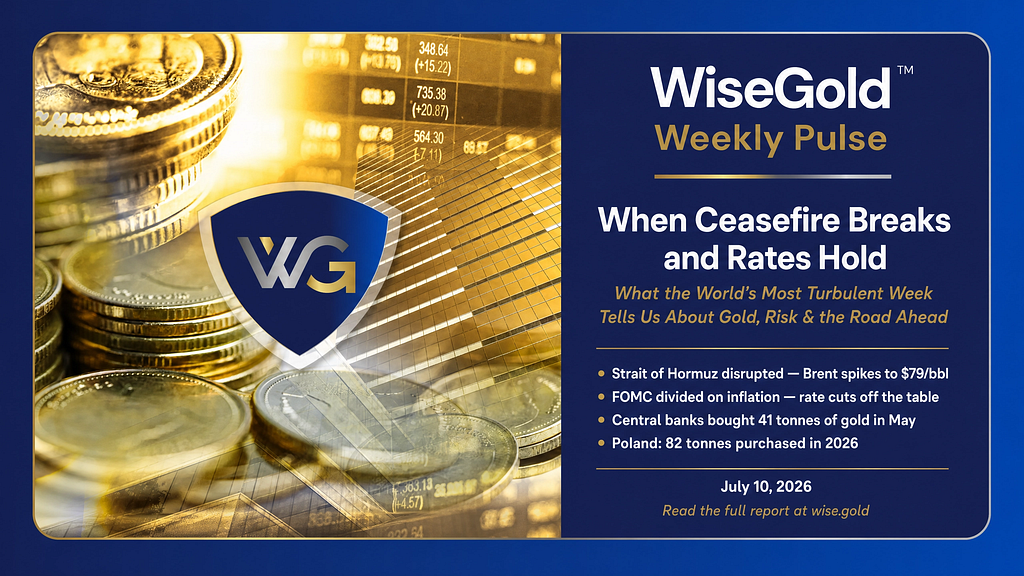
Pulso Semanal WiseGold | 10 de julho de 2026
Período de Cobertura: 4 de junho de 2026 (00:00:00 EST) a 10 de julho de 2026 (11:00:00 EST)
A WiseGold Capital faz parceria com consultores para ajudá-los a gerenciar ativos para seus clientes. A WiseGold Capital não é gestora de ativos nem consultora financeira; É uma empresa de consultoria e logística. Nada nesta publicação constitui aconselhamento de investimento.
Sobre a WiseGold
O WiseGold Weekly Pulse é publicado pela WiseGold, uma empresa de consultoria e logística que faz parcerias com consultores financeiros, family offices e gestores de fundos para facilitar o acesso a metais preciosos físicos como parte de um quadro mais amplo de preservação de patrimônio e diversificação de portfólio. Recursos adicionais, incluindo comentários de mercado de nível institucional, conteúdo educacional sobre fundamentos de metais preciosos e informações sobre os serviços de apoio de consultoria da WiseGold, estão disponíveis no https://wise.gold.
Resumo Executivo
Os mercados globais navegaram por uma semana complexa caracterizada por tensões geopolíticas crescentes no Oriente Médio e sinais macroeconômicos mistos. A retomada das hostilidades entre os EUA e o Irã perturbou severamente o frágil cessar-fogo, levando a uma paralisação temporária do transporte pelo Estreito de Ormuz e a um subsequente aumento nos preços do petróleo [14] [15]. Simultaneamente, a divulgação das atas do Comitê Federal de Mercado Aberto (FOMC) em junho revelou um banco central dividido lidando com preocupações persistentes com a inflação, o que diminuiu as expectativas de cortes de juros no curto prazo [1] [2]. Na Zona do Euro, o Banco Central Europeu (BCE) manteve uma postura cautelosa diante de sinais de relaxamento, mas ainda assim inflação elevada [3] [4]. O setor de metais preciosos experimentou volatilidade, com o ouro inicialmente caindo devido ao sentimento agressivo do Fed antes de se recuperar com a recuperação da demanda por porto seguro após a escalada geopolítica [11] [12].
Principais Pontos
- A escalada do conflito entre EUA e Irã desestabilizou o Estreito de Ormuz, elevando os preços do petróleo.
- As atas do FOMC indicaram um comitê dividido com preocupações crescentes sobre a persistência da inflação.
- Dados do mercado de trabalho dos EUA mostraram sinais de esfriamento, complicando a perspectiva de política do Fed.
- Os preços do ouro apresentaram volatilidade, equilibrando expectativas agressivas de juros com fluxos de porto seguro.
- As compras de ouro pelos bancos centrais permaneceram robustas, fornecendo suporte estrutural para o lingotte.
Linha do tempo da Semana de Revisão do Mercado & Macro
- Sáb, 4 de julho: Os benefícios iniciais de desemprego diminuíram para 215.000, sugerindo um mercado de trabalho ainda resiliente [5].
- Segunda-feira, 6 de julho: O PMI de serviços do ISM dos EUA registrou 54,0%, indicando expansão contínua, mas em ritmo mais lento [9] [10].
- Ter-feira, 7 de julho: As expectativas medianas de inflação nos EUA para um ano subiram para 3,7%, a maior desde setembro de 2023 [6].
- Quarta-feira, 8 de julho: Ata de junho do FOMC divulgada, mostrando um comitê dividido sobre o futuro das taxas de juros [1] [2].
- Quinta-feira, 9 de julho: EUA e Irã trocaram novos ataques militares, efetivamente colapsando o recente acordo de cessar-fogo [14] [15].
- Sex 10 Jul (10:00): Os mercados globais de ações enfrentaram pressão de queda, já que os riscos geopolíticos superaram o otimismo impulsionado pela tecnologia [7] [8].
Mergulhos Temáticos Profundos
Política Macro e Monetária
O cenário da política monetária foi dominado pela divulgação das atas da reunião de junho do FOMC. O documento destacou uma clara divisão entre os formuladores de políticas. Enquanto alguns participantes viam um cenário em que a inflação poderia diminuir, permitindo taxas mais baixas, "quase todos" do grupo preocupado com a inflação persistente consideraram um aumento de taxa necessário caso as pressões de preços permanecessem elevadas [1] [2]. O debate destacou a abordagem dependente de dados do Fed e a diminuição da probabilidade de cortes nas taxas de juros no curto prazo. Globalmente, o BCE manteve uma postura cautelosa, reconhecendo o progresso em relação à inflação, mas permanecendo vigilante contra efeitos secundários [3] [4].
Dados de Inflação e Crescimento
Os dados de inflação apresentaram um quadro misto. Nos EUA, as expectativas medianas de inflação para o próximo ano subiram para 3,7%, refletindo preocupações persistentes dos consumidores [6]. No entanto, o PMI de Serviços do ISM dos EUA indicou expansão econômica contínua, embora em um ritmo um pouco mais lento, com o Índice de Preços caindo para 67,7%, sugerindo algum alívio nas pressões sobre custos de insumos [9] [10]. Na Europa, o IPC alemão desacelerou para 2,3% em junho, alinhando-se com a narrativa mais ampla de desinflação do BCE [4].
Taxas e Dinâmica da Curva de Juros
Os rendimentos do Tesouro dos EUA sofreram pressão de alta, impulsionada pelo tom agressivo das atas do FOMC e pela revalorização das expectativas de juros. O rendimento do Tesouro de 10 anos subiu acima de 4,5%, refletindo preocupações de que o Fed possa precisar manter as taxas mais altas por mais tempo para combater a inflação persistente [8]. A curva de juros permaneceu invertida, sinalizando uma apreensão contínua do mercado quanto às perspectivas econômicas de médio prazo.
Panorama de FX & Dólar
O Índice do Dólar dos EUA (DXY) demonstrou resiliência, apoiada pela perspectiva de uma política monetária restritiva prolongada. A força do dólar foi particularmente notável em relação ao iene japonês, que enfraqueceu além da marca de 162, seu nível mais fraco desde os anos 1980, apesar do sentimento empresarial resiliente no Japão [7]. O euro permaneceu relativamente estável em relação ao dólar, ancorado pela abordagem de política ponderada do BCE.
Contexto de Energia e Commodities Gerais
Os mercados de energia eram altamente voláteis, impulsionados principalmente pelo conflito renovado entre os EUA e o Irã. A escalada ameaçou o transporte pelo crítico Estreito de Ormuz, fazendo com que o petróleo bruto Brent disparasse para $79 por barril [14] [15]. Esse prêmio de risco geopolítico ofuscou a pressão descendente anterior sobre os preços decorrente de preocupações com a demanda global e o aumento esperado na produção da OPEP+ [13].
Foco em Metais Preciosos
- Ouro: Negociado por aproximadamente $4.100 a $4.140/oz.
- Prata: Negociado por aproximadamente $58,00 a $61,50/oz.
- Platina: Negociado aproximadamente entre $1.610 e $1.780/oz.
- Palladium: Negociado entre aproximadamente $1.200 a $1.300/oz.
Metais preciosos passaram por uma disputa entre forças rivais. Inicialmente, os preços do ouro caíram sob o peso das expectativas agressivas do Fed e do aumento dos rendimentos dos títulos do Tesouro do Tesouro (Thrub). No entanto, a escalada no Oriente Médio reacendeu a demanda por porto seguro, ajudando o ouro precioso a recuperar parte de suas perdas até o final da semana [11] [12]. Os dados de posicionamento indicaram uma leve redução nas apostas otimistas entre os traders de futuros, enquanto a demanda dos bancos centrais, especialmente da Polônia e China, continuou a oferecer um piso estrutural forte para os preços [16] [17].
Crédito e Liquidez
Os mercados de crédito permaneceram relativamente estáveis apesar da turbulência geopolítica. Os spreads dos títulos corporativos permaneceram próximos às médias de longo prazo, enquanto os investidores continuaram a buscar rendimento em um ambiente mais alto por mais tempo. No entanto, o ressurgimento das preocupações com a inflação pode levar a uma reavaliação do risco de crédito nas próximas semanas.
Sentimento de Ações e Volatilidade
Os mercados globais de ações enfrentaram ventos contrários ao longo da semana. O otimismo inicial em torno das ações de tecnologia impulsionadas por IA foi ofuscado pelos minutos belicistas do FOMC e pela escalada do conflito no Oriente Médio [7] [8]. O Índice de Volatilidade do CBOE (VIX) subiu levemente, refletindo o aumento da ansiedade do mercado e uma mudança para a aversão ao risco.
Geopolítica & Risco Estratégico
O risco geopolítico ganhou destaque com o colapso do cessar-fogo entre EUA e Irã. A troca de ataques militares e a subsequente perturbação do transporte marítimo no Estreito de Ormuz aumentaram significativamente a ameaça de um conflito regional mais amplo [14] [15]. Esse desenvolvimento tem profundas implicações para o fornecimento global de energia e para a estabilidade do mercado.
Temas Estruturais e de Longo Prazo
A mudança estrutural em curso para a multipolaridade e a armamento das rotas comerciais e energéticas foram fortemente destacadas pelos eventos no Oriente Médio. A contínua acumulação de reservas de ouro pelos bancos centrais ressalta uma tendência de longo prazo de diversificação em relação ao dólar americano, impulsionada por incertezas geopolíticas e pelo desejo de autonomia financeira [16] [17].
Interconexões entre Ativos
- A inclinação agressiva nos minutos do FOMC levou os rendimentos do Tesouro dos EUA para alta, o que inicialmente exerceu pressão para baixo sobre ativos sem rendimento como o ouro.
- A escalada do conflito EUA-Irã causou um aumento nos preços do petróleo, reacendendo os temores da inflação e complicando os caminhos de política dos bancos centrais.
- O aumento do risco geopolítico levou a uma fuga para a segurança, apoiando o dólar americano e, eventualmente, levando a uma recuperação dos preços do ouro.
- A combinação de rendimentos mais altos e incerteza geopolítica pesou sobre os mercados globais de ações, levando a maior volatilidade.
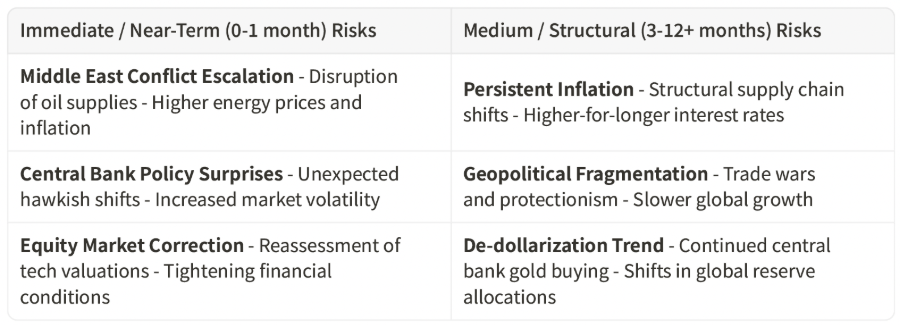
Snapshot da Matriz de Risco
Observação de Cenários & Catalisadores Avançados
- Divulgação de Dados do IPC dos EUA (meados de julho): Probabilidade Base. Um resultado acima do esperado pode solidificar as expectativas de um novo endurecimento do Fed, colocando um vento contrário para os metais preciosos.
- Escalada adicional no Oriente Médio: Probabilidade Elevada. Ataques militares contínuos podem prejudicar severamente o fornecimento de petróleo, elevando os preços da energia e aumentando a demanda por ouro em porto seguro.
- Retomada das Negociações de Paz EUA-Irã: Cauda de Baixa Probabilidade. Um avanço diplomático repentino poderia reduzir os prêmios de risco geopolítico, potencialmente levando a uma queda nos preços do petróleo e do ouro.
Contexto e Implicações do Portfólio
Os eventos da última semana ressaltam a importância de manter um portfólio diversificado diante das incertezas macroeconômicas e geopolíticas. O ressurgimento das preocupações com a inflação e a escalada do conflito no Oriente Médio destacam as potenciais vulnerabilidades das classes tradicionais de ativos. Nesse contexto, ativos que oferecem características de refúgio seguro e proteção contra a erosão do poder de compra podem desempenhar um papel valioso no aumento da resiliência do portfólio.
Tese Estratégica sobre Metais Preciosos
Atributo de Diversificação
Metais preciosos, especialmente o ouro, continuam a demonstrar seu valor como uma classe de ativos não correlacionada. Durante períodos de estresse geopolítico elevado e volatilidade do mercado de ações, o desempenho do ouro frequentemente diverge dos ativos financeiros tradicionais, proporcionando um efeito estabilizador sobre as carteiras.
Proteção de Patrimônio e Poder de Compra
A natureza persistente da inflação, evidenciada pelo recente aumento dos preços da energia e das expectativas dos consumidores, reforça a justificativa para manter ativos sólidos. O ouro historicamente serviu como uma reserva confiável de valor, protegendo o poder de compra contra os efeitos erosivos da depreciação da moeda fiduciária.
Mitigação de Redução de Impacto e Opcionalidade de Crise
O colapso repentino do cessar-fogo entre EUA e Irã serve como um lembrete contundente da imprevisibilidade dos eventos geopolíticos. O status do ouro como ativo de refúgio oferece aos investidores opcionalidade em crises, oferecendo uma possível proteção contra quedas severas do mercado causadas por choques imprevisíveis.
Fatores de Demanda Estrutural
A demanda robusta e sustentada por ouro dos bancos centrais, especialmente em mercados emergentes, fornece uma base estrutural sólida para o mercado de metais preciosos [16] [17]. Essa tendência reflete uma mudança estratégica mais ampla em direção à diversificação e à independência financeira, que provavelmente persistirá no médio e longo prazo.
Estrutura de Alocação
Do ponto de vista estratégico, a alocação em metais preciosos é frequentemente vista como uma medida prudente para aumentar a robustez do portfólio. Embora a alocação ótima varie dependendo da tolerância ao risco individual e dos objetivos de investimento, a inclusão de ouro e outros metais preciosos pode contribuir para uma estratégia de investimento mais equilibrada e resiliente.
Cápsula Resumo
- Macro Pulse: As preocupações com a inflação nos EUA persistem, complicando a perspectiva de política do Fed.
- Posição dos Metais: O ouro continua sustentado por fluxos de refúgio seguro e pela demanda dos bancos centrais, apesar das expectativas agressivas de juros.
- Tom de Risco: Tensões geopolíticas aumentaram a ansiedade e a volatilidade do mercado.
- Nuance de posicionamento: Os traders de futuros reduziram ligeiramente as apostas otimistas no ouro, mas a demanda estrutural continua forte.
- Forward Watch: Foco principal nos próximos dados de inflação dos EUA e nos desenvolvimentos no Oriente Médio.
- Tema Estrutural: A acumulação de ouro dos bancos centrais destaca a tendência contínua de desdolarização e diversificação.
Lista de Fontes
[1] CNBC — Autoridades do Fed estavam divididas quanto à direção das taxas de juros na última reunião, mostra a ata — 8 de julho de 2026 — https://www.cnbc.com/2026/07/08/fed-minutes-june-2026-.html [2] Reuters — As preocupações com a inflação dos formuladores de políticas do Fed aumentaram na reunião de junho, mostra a ata — 8 de julho de 2026 — https://www.reuters.com/business/fed-minutes-due-analysts-debate-whether-warsh-will-curtail-them-2026-07-08/ [3] Banco Central Europeu — Reunião de 10 a 11 de junho de 2026 — 9 de julho de 2026 — https://www.ecb.europa.eu/press/accounts/2026/html/ecb.mg260709~0e7f8241c9.en.html [4] State Street Global Advisors — Dados trabalhistas nos EUA levantam novas questões — 6 de julho de 2026 — https://www.ssga.com/insights/weekly-economic-perspectives-07-july-2026.html [5] Economia Comercial — Benefícios Iniciais de Desemprego dos Estados Unidos — 10 de julho de 2026 — https://tradingeconomics.com/united-states/jobless-claims [6] Economia do Trading — Expectativas de Inflação do Consumidor nos Estados Unidos — 7 de julho de 2026 — https://tradingeconomics.com/united-states/inflation-expectations [7] BlackRock Investment Institute — Comentário semanal de mercado — 6 de julho de 2026 — https://www.blackrock.com/corporate/insights/blackrock-investment-institute/publications/weekly-commentary [8] Sage Advisory Services — Perspectiva de renda fixa em cinco gráficos Deixe a renda fazer o trabalho — 8 de julho de 2026 — https://www.sageadvisory.com/article/fixed-income-outlook-in-five-charts-let-income-do-the-work [9] Instituto de Gestão de Suprimentos — PMI de Serviços em 54%; Relatório PMI de Serviços ISM de junho de 2026 — 6 de julho de 2026 — https://www.prnewswire.com/news-releases/services-pmi-at-54-june-2026-ism-services-pmi-report-302817275.html [10] Perspectivas de Consultores — PMI de Serviços ISM: Expansão Contínua em junho — 6 de julho de 2026 — https://www.advisorperspectives.com/dshort/updates/2026/07/06/ism-services-pmi-june-2026 [11] Kitco News — As mínimas do ouro e da prata em 2026 provavelmente estão em cheio, e um retorno aos fundamentos trará novos ganhos Hemke de Sprott — 7 de julho de 2026 — https://www.kitco.com/news/article/2026-07-07/gold-and-silvers-2026-price-lows-are-likely-and-return-fundamentals-will [12] RTTNews — Ouro Caminha para Perda Semanal Enquanto Tensões EUA-Irã Aumentam — 10 de julho de 2026 — https://www.rttnews.com/3666010/gold-headed-for-weekly-loss-as-us-iran-tensions-escalate.aspx [13] IEA — Relatório do Mercado de Petróleo julho de 2026 — 10 de julho de 2026 — https://www.iea.org/reports/oil-market-report-july-2026 [14] AP News — Um acordo com o Irã acabou e a guerra voltou? Uma linha do tempo do conflito e das negociações — 8 de julho de 2026 — https://apnews.com/article/iran-us-timeline-trump-hormuz-war-ceasefire-04da58cbae991183f8b52ef5bf615963 [15] Al Jazeera — Guerra EUA-Irã: As negociações de paz serão retomadas e quando? — 10 de julho de 2026 — https://www.aljazeera.com/news/2026/7/10/us-iran-war-will-peace-talks-ever-resume-and-when [16] Bloomberg — Polônia comprou 82 toneladas de ouro este ano, segundo banqueiro central — 9 de julho de 2026 — https://www.bloomberg.com/news/articles/2026-07-09/poland-bought-82-tons-of-gold-this-year-central-banker-says [17] Kitco News — Bancos centrais aumentam reservas de ouro com 41 toneladas líquidas adquiridas em maio — Conselho Mundial do Ouro — 3 de julho de 2026 — https://www.kitco.com/news/article/2026-07-03/central-banks-boost-gold-reserves-net-41-tonnes-purchased-may-world-gold
Pendente de Verificação
Tonelagem exata do fluxo do ETF para o período de cobertura.
Metodologia e Notas
Os dados deste relatório foram compilados a partir de fontes públicas de notícias financeiras, publicações de bancos centrais e provedores de dados de mercado. As faixas de preço para metais preciosos são aproximações baseadas na atividade de negociação de futuros à vista e no mês inicial durante o período de cobertura. O período de cobertura se estende até sexta-feira, às 11h00 EST, para incluir desenvolvimentos de última hora e divulgações de dados programadas.
Divulgação
Este relatório é apenas para fins informativos e não constitui aconselhamento de investimento, recomendação, oferta ou solicitação para comprar ou vender qualquer instrumento financeiro. As opiniões expressas baseiam-se em informações publicamente disponíveis que se acredita serem confiáveis, mas a precisão ou completude não pode ser garantida. O desempenho passado não indica resultados futuros. Os leitores devem realizar sua própria análise e consultar profissionais qualificados antes de tomar qualquer decisão financeira.
#WiseGold #Gold #PreciousMetals #MacroEconomics #Inflation #CentralBanks #GeopoliticalRisk #WealthManagement #PortfolioDiversification #HardAssets #FinancialAdvisors #FamilyOffice #WiseGoldCapital